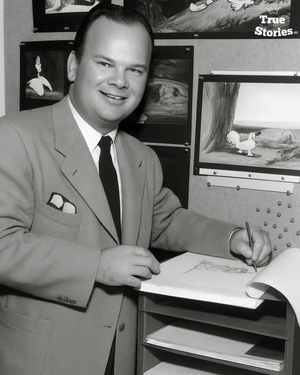
Tex Avery walked into a Warner Bros soundstage in 1937, slammed a stack of rejected gags onto the table, and told the animation team they were wasting their lives if they kept making cartoons that moved slower than the audience’s imagination.
He was twenty nine. Unknown. Unproven. Animators twice his age stared at him like he had lost his mind. Avery grabbed a pencil, sketched a wolf whose eyes blasted out of his skull, and said, “This is timing.” He drew Bugs Bunny leaning into danger instead of running from it. He drew motion lines that bent physics. He drew jokes that exploded before the viewer could finish blinking. The room fell into silence. They had never seen comedy attack this fast.
Avery changed cartoon logic in real time. He banned realistic proportions. He pushed characters to stretch, squash, and snap like elastic. He timed gags to one frame precision. He forced the crew to cut extra drawings, speeding everything until the humor punched. When a scene felt too slow, he yelled “Faster” until the animator’s hands cramped. Colleagues said working for Avery was like chasing a man who could see five seconds into the future.
His ideas clashed with studio rules. Executives said characters should behave normally. Avery said normal was boring. He created Tex-isms: wolves howling at tables, characters leaping out of their own shadows, fourth wall breaks that mocked the film itself. He once restarted an entire short because he realized a single pause ruined the joke’s explosion. No one worked harder on chaos than Avery did.
The breakthrough arrived with Red Hot Riding Hood in 1943. MGM expected a safe fairy tale parody. Avery delivered a nightclub bombshell, a wolf self destructing with desire, and animation timing so violent the censors nearly banned it. MGM panicked but released it after edits. Audiences roared. Animators worldwide copied the style for decades.
Avery’s work schedule was brutal. He lived at his desk, slept on couches, and flipped through drawings until he found the exact frame where a gag lived. He cared nothing about celebrity. He cared about rhythm, surprise, impact. He believed cartoons should feel like adrenaline you could watch. When eyesight trouble slowed him late in life, he still walked into studios with new ideas scribbled on envelopes and napkins.
Tex Avery did not fine tune cartoons.
He blew them open and rebuilt the entire language of animated comedy from scratch, proving that imagination wins when nothing is off limits and timing is everything.









 www.imdb.com