FOXBORO, Mass. — Joshua Dobbs stands next to Drake Maye in the team’s tunnel, a short walk from the home locker room at Gillette Stadium. They run onto the field next to each other, the team’s two active quarterbacks, yet no one yells Dobbs’ name.
If all goes according to plan, he won’t play. No one will see the work he put into studying the game plan or learning new plays. Most teams’ favorite kind of backup is the one who is never seen. That typically means things are going well.
Dobbs knows all of this, of course. When he signed a two-year contract with New England worth $4 million per season, the Patriots became his ninth team in nine NFL seasons, counting his practice-squad stops. The 30-year-old out of Tennessee has spent time with the Pittsburgh Steelers, Tennessee Titans, Arizona Cardinals, Minnesota Vikings, San Francisco 49ers and Patriots. He has also spent time with the Jacksonville Jaguars, Cleveland Browns and Detroit Lions. All that time has yielded just 15 starts.
But teams still want players like Dobbs, in part, they’ll tell you, because of what they do off the field.
“It’s a unique dynamic, being able to manage different personalities with the offensive staff or with the quarterback,” Patriots coach Mike Vrabel said. “Josh has done that, and he’s done it pretty well.”
Still, his presence with the Patriots got us thinking: What does a backup quarterback do all week?
So we asked Dobbs.
Monday
Part of the schedule depends on how Sunday went. If the team won, they won’t have meetings. So he’s in around 8 a.m. after a loss, 9 after a win.
“But the same amount of work is going to get done either way,” Dobbs says.
Players are required to lift weights twice per week, but Dobbs does it three times since he usually doesn’t play. On Mondays, he focuses on his lower body.
Then he’ll review the game. Typically, Maye is doing the same with Josh McDaniels, so if the two of them are busy together, Dobbs will go through each play with quarterbacks coach Ashton Grant.
Even though Dobbs has appeared in only two games this season, he tries to treat Mondays as if he played. That’s why he focuses on recovery: sauna to cold tub to sauna to cold tub. He does that several times since that’s what he would do after a start. After that, he heads home.
“Monday is pretty light,” he said.
Tuesday
Most weeks in the NFL look pretty similar, at least at a high level, across teams. Mondays are about recovery. Practices typically take place Wednesday through Friday.
Tuesdays are typically an off day for players since it’s the coach’s longest day, one spent locked in quiet rooms studying film and drawing up new plays for the following week’s game plan. But it’s different for quarterbacks.
So while everyone else enjoys a quiet day, Patriots quarterbacks are at Gillette Stadium around 8 a.m.
Dobbs hasn’t experienced this before in the NFL, but every Tuesday morning, Vrabel has the scouting department create a presentation for the quarterbacks. The scouts break down each defensive back from the upcoming opponent, their background, strengths and weaknesses.
“That’s something that’s new for me here,” Dobbs said.
Then Dobbs is back in the gym for his second workout of the week, this one focused on his upper body.
He’s typically out of the facility around noon, but that’s because most of the work on Tuesdays is done at home.
By dinner time, McDaniels will usually have the first- and second-down game plan done, and the new plays will be loaded onto the quarterbacks’ tablets. They’ll go over them as a position group Wednesday, but Dobbs wants a head start.
So on his personal iPad, he draws out every play McDaniels added for the week and notes the ones he’ll have questions on when they review them the next day.
“It gets me reps of going through the play,” Dobbs said. “You’ve got to know where everyone is, you draw the motion, you’re picturing yourself motioning them, then going through the progression as you’re drawing it. On my personal iPad, I have every single play drawn up — since my second year in the league.
“As you’re drawing it, you’re thinking, ‘How are we reading this this week? What are we trying to accomplish with this play?’ That way, you’re a little ahead on the game plan. Then you can get the coach’s perspective the next day. That helps me get a little ahead.”
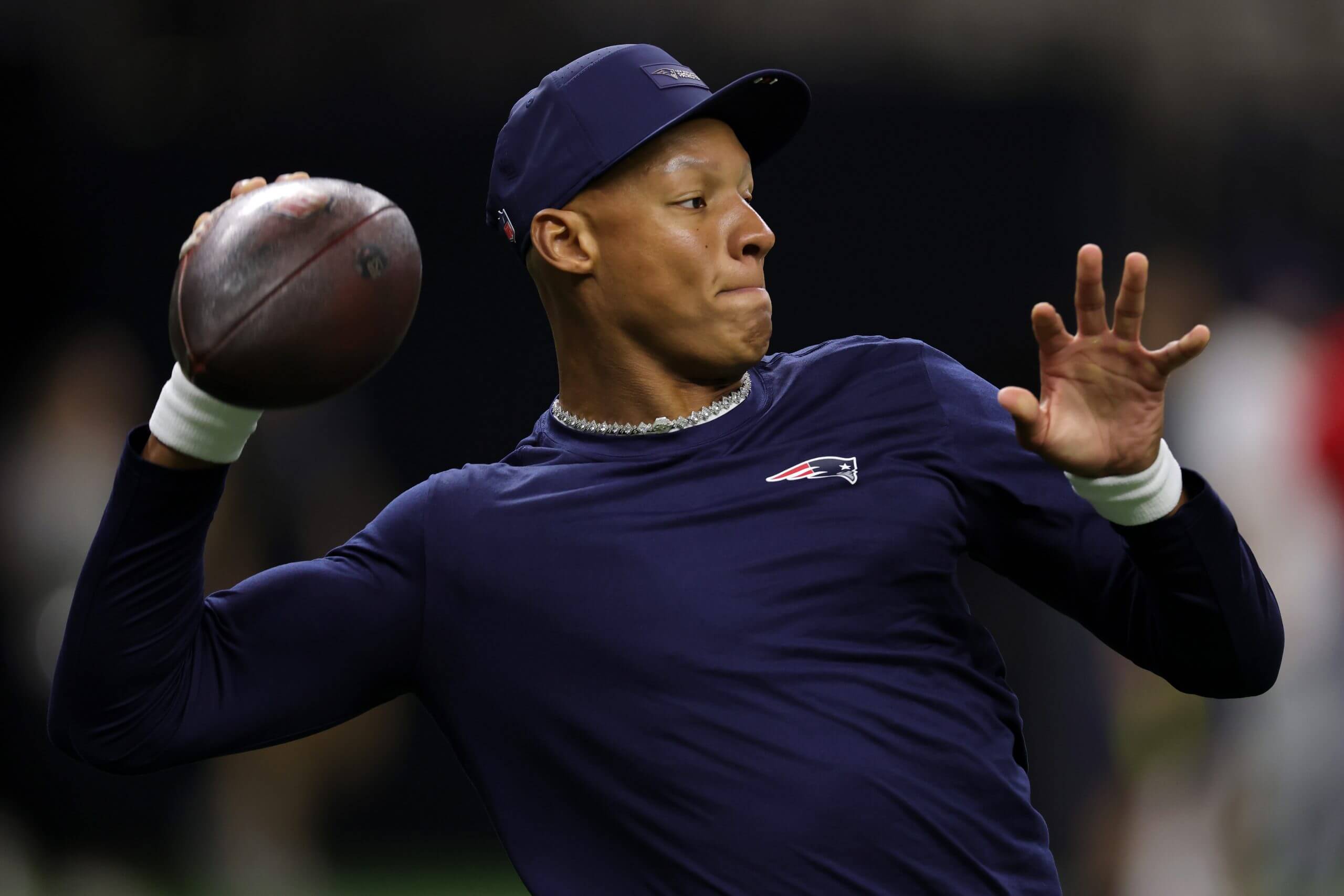
Joshua Dobbs’ one completion this season was a crucial third-down pass to DeMario Douglas, when Drake Maye was temporarily forced out of the game against the Titans.Stacy Revere / Getty Images
Wednesday
Tuesdays are the busiest day for coaches, but Wednesdays are the longest for players. Game plans are being taught and installed. Practices tend to be the toughest.
Dobbs gets in at 6:45 a.m., has breakfast and takes part in a devotional the team organizes.
Then it’s off to the quarterbacks’ meeting room to finish drawing up plays until their meeting starts at 8. By that point, he knows most of the early-down game plan and has questions about how to read certain plays.
“Some positions can just show up on Wednesday at 8 a.m. like, ‘All right, here we go for the week.’ But if you’re doing that as a quarterback, you’re always playing catchup,” Dobbs said. “And especially as the No. 2, since you don’t know if you’re going to get (practice) reps that week. By the time we’re installing as an offense, I’ve probably gone through the plays twice already — once at home, and once in the QB room asking questions.”
After a few more meetings, it’s off to an early-afternoon practice. Dobbs doesn’t get many reps there, but he makes mental notes of where Maye throws the ball on each play.
Then, after practice, Dobbs sticks around with the receivers who didn’t get to run the plays, since they were on the scout team, and they go through each play.
“It’s good getting the actual throws and seeing the reads and saying the plays out loud in a mock huddle,” Dobbs said. “We’ll do the motion and run the route. Then I’ll pick the next play. And whoever is the primary read or whichever position got the throw in practice, that’s who I’ll throw to.”
After practice, there is more time in the cold tub to recover. He’ll try to leave around 6:30 p.m.
Once he gets home, he draws out all the third-down plays, ones that they’ll install the next day.
“Just to get ahead again,” he said.
Thursday
“It’s honestly about the exact same day as Wednesday, just with third-down plays and situational football,” Dobbs says. “Come in the same time, leave the same time.”
On first and second downs, Dobbs said, you pretty much know what you’re going to get from defenses. But third downs are where the best game plans make a difference.
The Patriots break up their third-down plays into different categories. Third-and-very-short, Third-and-short, third-and-medium and third-and-long. Within each of those buckets are around eight plays.
“And they’re not the same plays from a different game plan,” Dobbs said. “They’re totally new plays. Essentially, it’s like, if they do this, we’ve got this play. But if they do this other thing, we’ll alert to this play.”
Two years ago, after a rash of injuries, the Vikings traded for Dobbs. That meant Dobbs worked for a while with Kevin O’Connell, who runs one of the most complex offenses in the league but consistently gets the most out of his quarterbacks.
“I would leave third-down days with him and be exhausted,” Dobbs said. “Like, if we have no third downs, that would be lovely. Those can be long days. Even longer than Wednesdays sometimes.”
Friday
The morning starts early. Dobbs does his final weights workout of the week (this time, a total-body workout) at 6:30, then chapel an hour later, then a team meeting after that.
The final prep day is focused on the red zone. All of the quarterbacks meet with Grant and McDaniels to go over the plan.
“A lot of times, red zone will have a lot of crossover with scheme plays,” Dobbs said. “So it’s not as intensive as third downs, even if it’s still super important. But at that point, you’ve been watching the opponent for a whole week and have done a bunch of work, so you have a good feel for what you’ll get in the red zone.”
The final practice of the week follows, and the nerves from Tuesday night about trying to learn a whole new game plan have subsided.
“By this point, you have a really good feel for what you’re going to see and get,” Dobbs said. “And if you don’t, you probably didn’t prepare well enough.”
By Friday, after the discussions with the offensive coordinator, after the tweaks made after running the plays in practice, and after all the time spent planning together, the quarterbacks generally know exactly which 60-ish plays they’ll run Sunday out of the more than 500 variations that get used throughout a season.
“Not only that, you can probably guess where you’ll throw the football on each play,” Dobbs said. “Because you’ve done the homework on them and know why we’re calling them.”
After a long week, Dobbs typically tries to get home in time for a nap before date night with his fiancée, Jocelyn Lara.
Saturday
This season, Maye decided to bring in all the skill position players on Saturday mornings to chat with the quarterbacks. It’s a chance to make sure they’re on the same page.
“That’s around 9, so I get to sleep in a little,” Dobbs said.
Then the QBs will talk through the game plan once more before the whole team is due at the team hotel that evening.
When Dobbs gets up to his room at the hotel, he plays stadium background noise from a Spotify playlist on his phone and calls out each play on the call sheet, which takes about an hour.
“I’m not yelling and keeping people up next door, but I am saying it all out loud,” Dobbs said.
It’s more than just saying the play out loud. He mimics his dropbacks and looks in the direction of where the primary target would be.
Backup or not, there are nerves the night before a game, and usually some tossing and turning before falling asleep. But the goal is to be out by midnight.
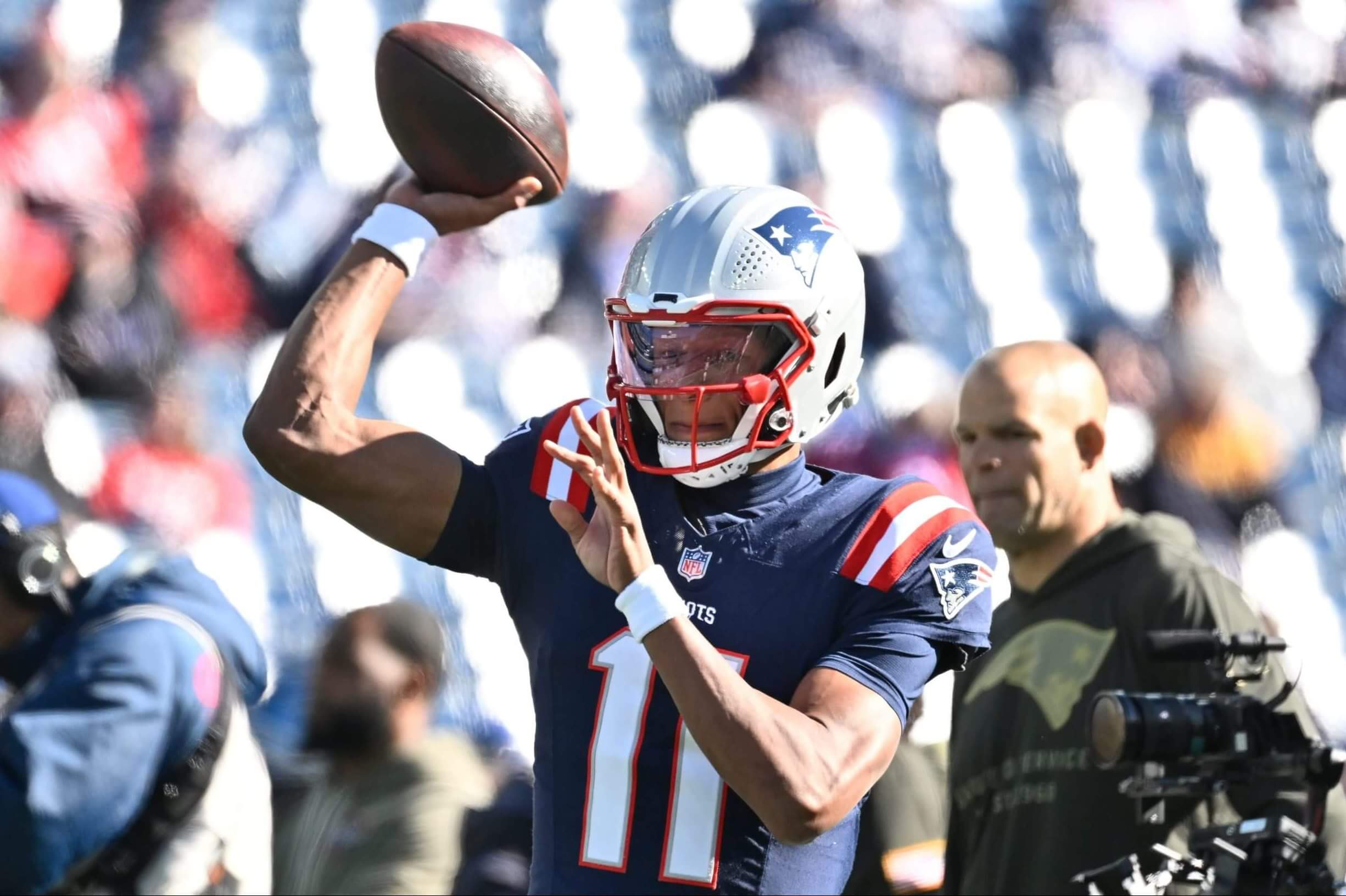
Despite being a backup, Joshua Dobbs wears his helmet on the sideline during games. “If something were to happen, you don’t want to be that dude (who doesn’t have his helmet),” Dobbs said.Eric Canha / Imagn Images
Sunday
The alarm goes off at 7, and Dobbs tries to be out of the hotel (assuming it’s a home game) by 7:30 so he can get breakfast with his fiancée.
Even the players have to beat traffic on the way into Gillette Stadium, so he tries to get there around 9:30.
Each quarterback has his own pregame routine, and for Dobbs, it’s more about trying to get loose than running through specific plays.
During the game, Dobbs wears his helmet on the sideline. The team has an earpiece he could wear on the sideline to hear the play calls (which some backups around the league opt for) instead of the speaker in his helmet, but the helmet helps him feel prepared.
“If something were to happen, you don’t want to be that dude,” Dobbs said. “Where the team is at the 20-yard line going in to score, and you’ve got to run 30 yards to get your helmet. You’d just look ill-prepared.”
He’s also watching the defense, looking for nuggets he can share with Maye and McDaniels about how they’re attacking certain concepts.
“But there’s no ego to prove you know something or say the quarterback should’ve done this,” Dobbs said. “That’s the worst. It’s just a conversation about what you’ve seen, saying ‘Nice throw, good play.’ Talking ahead to the next drive. And by going through that routine, having your helmet on, throwing and staying warmed up, going through the plays, you’re treating it as if you’re playing. So your mind is still locked in on the game.”
Earlier this season in Tennessee, Maye was forced to exit a one-score game against the Titans to get evaluated for a concussion, a process that kept him out for three plays. But Dobbs calmly entered, and on a crucial third-and-4, he evaded a strong pass rush, stepped up into the pocket and completed a 12-yard pass to DeMario Douglas. Maye called it the “play of the day.”
“The league that we’re in, these opportunities are so fragile that if you’re not prepared for your chance, you might not ever get another one,” Dobbs said.
If family or friends came into town for the game, Dobbs will go out to eat with them afterward. But he typically likes to go to bed early on Sunday nights.
Because once Monday arrives and a new week starts, he’s got a whole new game plan to learn — even if he never gets to use it.