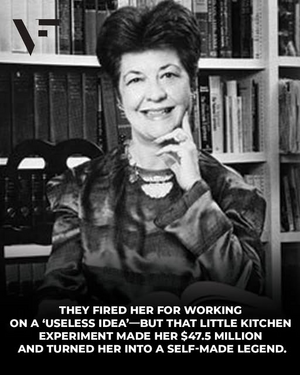
Dallas, Texas, 1950s.
Bette Nesmith Graham was a single mother raising her young son on a secretary’s salary at Texas Bank & Trust. Rent, food, school supplies—everything felt like a struggle. And she was constantly battling something that seemed trivial but was ruining her workday: typing mistakes.
In the age of manual typewriters and carbon copies, typing wasn’t forgiving. One wrong letter meant pulling out the page, rolling in a new sheet, and starting over. If you made the same mistake twice—too bad. You started again. Precision wasn’t optional. It was survival.
One afternoon, Bette watched sign painters fixing an error on the bank’s storefront. They didn’t start over. They simply painted over the mistake. That small observation sparked a radical thought: Why couldn’t typewritten errors be painted over too?
She didn’t have a lab or equipment. She didn’t have training in chemistry. She had a kitchen, a blender from Sears, and tempera paint.
Night after night, after her son Michael went to bed, Bette mixed paint in her blender, adding ingredients drop by drop, adjusting the thickness, changing the color, trying to match the shade of typewriter paper. Too thin, and letters showed through. Too thick, and it clumped. Too bright, and it stood out.
Months passed before she finally had something that worked—a smooth, fast-drying fluid that covered errors cleanly. She poured it into small bottles and took one to work. Her pages suddenly came out spotless. Her coworkers noticed immediately.
“What is that stuff?” they asked.
Bette smiled. “Mistake Out.”
Soon every secretary in the bank wanted a bottle. Then word spread through other offices. Bette spent evenings filling bottles by hand, typing labels, and mixing new batches. Michael, who would later join The Monkees, helped after school. Their home became a miniature factory.
But Bette still needed her job. She couldn’t afford to lose it. Then came the mistake that changed everything. In 1956, she accidentally typed “Mistake Out Company” instead of her boss’s name at the bottom of a letter. He fired her on the spot.
She went home terrified—but also strangely free.
With no employer to rely on, she decided to rely on herself. She incorporated her business in 1958, renaming it Liquid Paper. Banks refused to loan her money. Executives dismissed her. Major corporations, including IBM, rejected her product outright. A secretary with a homemade invention didn’t fit their idea of a serious entrepreneur.
But the women behind the desks understood her completely. They used typewriters. They lived with the frustration. They appreciated a solution. So Bette marketed directly to them. Demand grew steadily. Offices began ordering by the dozens, then hundreds, then thousands.
By 1968, Liquid Paper was a million-bottle-a-year business. By 1975, twenty-five million bottles were sold annually. Her garage had long since been replaced by a full manufacturing plant.
And as her company grew, Bette built it into the kind of workplace she wished she’d had. She provided on-site childcare years before corporations considered it. She offered flexible schedules, continuing education, employee recreation spaces, and profit-sharing programs. Her company became known for its supportive environment—especially for working mothers.
In 1979, Gillette Corporation made an offer Bette could hardly imagine: $47.5 million plus future royalties. She accepted. The woman who had once worried about affording groceries had built a global brand worth nearly $50 million.
Just six months later, in May 1980, Bette Nesmith Graham passed away at age 56. But she left behind more than a fortune. She created charitable foundations that supported women in business, artists, and creators—funded largely from her Liquid Paper success.
The most ironic part of her story is that her invention eventually became obsolete. Word processors and computers made typewriter errors—and correction fluid—disappear. But Bette’s legacy was never about the longevity of the product. It was about what she proved possible.
She showed that innovation doesn’t require credentials, investors, or permission. It requires determination. She showed that an overlooked woman in a male-dominated office could create something that changed how millions of people worked. She demonstrated that companies could support working mothers without sacrificing profits.
Most of all, she showed that even the smallest daily frustration—if examined with creativity and persistence—can become a multimillion-dollar idea.
Bette Nesmith Graham started as a secretary terrified of making mistakes. She ended as a pioneering entrepreneur whose courage helped redefine what women could accomplish. She mixed paint in her kitchen. She built an empire. And in doing so, she proved that mistakes don’t have to be failures. Sometimes they’re beginnings.